
Afghan weddings,
explained.
A warm, practical guide to the traditions, family customs, clothing, food, music, ceremony and joyful chaos that can shape an Afghan wedding — from the first family conversations to the final dance.

Many ways. Afghan wedding customs vary by region, ethnicity, language, religion and family.
An Afghan wedding is a family event before it is anything else.
Afghan weddings are often described as large, colorful and energetic. That can be true, but scale is only the surface. The deeper structure is relational: two people marry, and two families begin a new relationship with one another. Elders may carry real influence, hospitality is taken seriously, and the guest list can extend well beyond the couple’s closest friends.
Many celebrations include an Islamic Nikah, formal engagement traditions, a Shab-e-Henna or henna celebration, elaborate food, multiple outfit changes, music and dancing, and post-wedding visits. But none of these should be treated as mandatory. Afghan families differ enormously, both inside Afghanistan and throughout the diaspora.
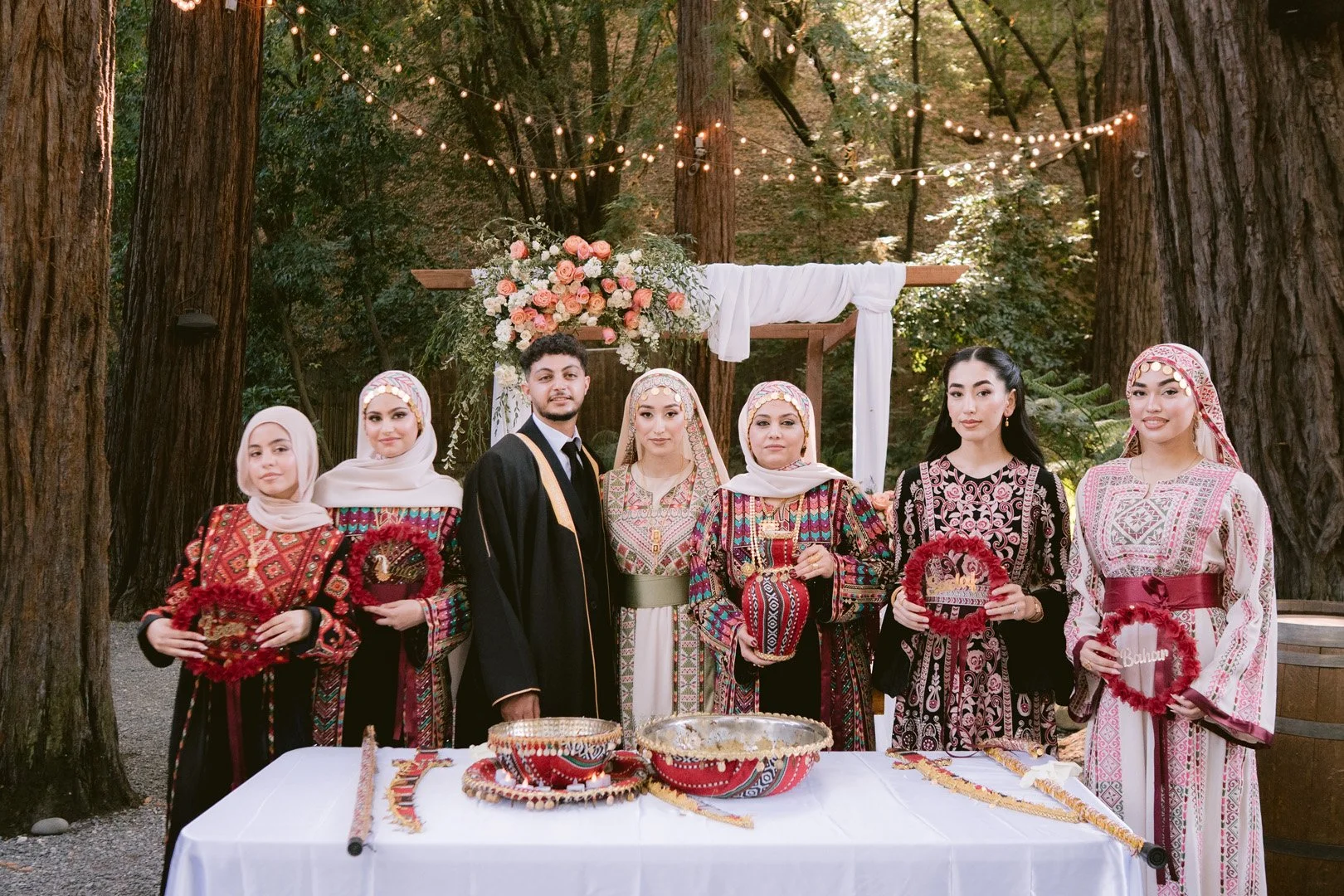
There is no single “Afghan wedding.”
Afghanistan is multilingual, multiethnic and regionally diverse. A Kabul wedding may not look like a Kandahari wedding. A Hazara family may have a different music set, clothing tradition or ceremony flow from a Pashtun, Tajik or Uzbek family. Urban and rural customs can differ. So can Sunni and Shia practice. And diaspora families often combine Afghan traditions with the wedding customs of the country where they now live.
That is why the most accurate way to understand Afghan wedding traditions is as a vocabulary of customs — not a fixed script. Families choose the pieces that belong to them.
When someone says “Afghans always do this,” be skeptical. Ask which family, which region, which community and which generation.
From the first family conversation to married life.
Not every couple follows every stage, and names vary by language and family. These are some of the most commonly discussed moments in Afghan wedding planning.
Khastegari
Family proposal / courtship stageIn many families, the relationship becomes formal through a visit or conversation between families. The exact level of parental involvement ranges from traditional family-arranged introductions to modern couples who already know one another and bring their families in later.
Shirini Khori
“Eating sweets” / engagement celebrationA celebratory gathering that marks agreement between the families. Sweets, tea, gifts, rings and formal introductions may be part of the occasion. In some diaspora communities, this becomes a full-scale engagement event.
Namzadi
Engagement periodThe couple is formally engaged. Depending on the family, the engagement may be short or extended and can include its own parties, gift exchanges, clothing traditions and family visits.
Nikah
Islamic marriage contractThe religious marriage. It may be intimate or large, held at home, in a mosque, at a venue, or immediately before the reception. The focus is consent, the marriage agreement and religious observance.
Shab-e-Henna
Henna nightA festive pre-wedding gathering centered on henna, traditional clothing, music and family. Some are women-only; others include both sides of the family. The groom may also receive henna.
Arosi & beyond
Wedding reception / post-wedding gatheringsThe reception can include entrances, dinner, speeches, dancing and family rituals. Some families also observe a post-wedding gathering known as Takht Jami or a similar family visit after the marriage.
The legal and spiritual center of the marriage.
For Muslim Afghan couples, the Nikah is the marriage contract. The ceremony itself is usually quieter and more solemn than the reception that follows, though the setting and sequence differ from family to family.
- 01Consent mattersThe couple’s agreement to the marriage is foundational. The details of how consent is expressed depend on the officiant and community.
- 02Mahr is discussedThe marriage contract includes a mahr, a marital gift or obligation owed to the bride. It is distinct from culturally negotiated wedding expenses or bride-price practices.
- 03Recitation and guidanceQur’anic recitation, prayer and advice about marriage may be included. Some couples sign documents during the ceremony; others complete legal paperwork separately.
- 04Aina Moshaf may followSome Afghan families include a mirror-and-Qur’an ritual in which the newly married couple sits together beneath a shawl and looks into a mirror. It is meaningful to many families, but it is not universal.

The night before can be its own world.
Henna night can be intimate, theatrical, traditional, modern — or all four at once. It is often one of the most visually expressive parts of an Afghan wedding.
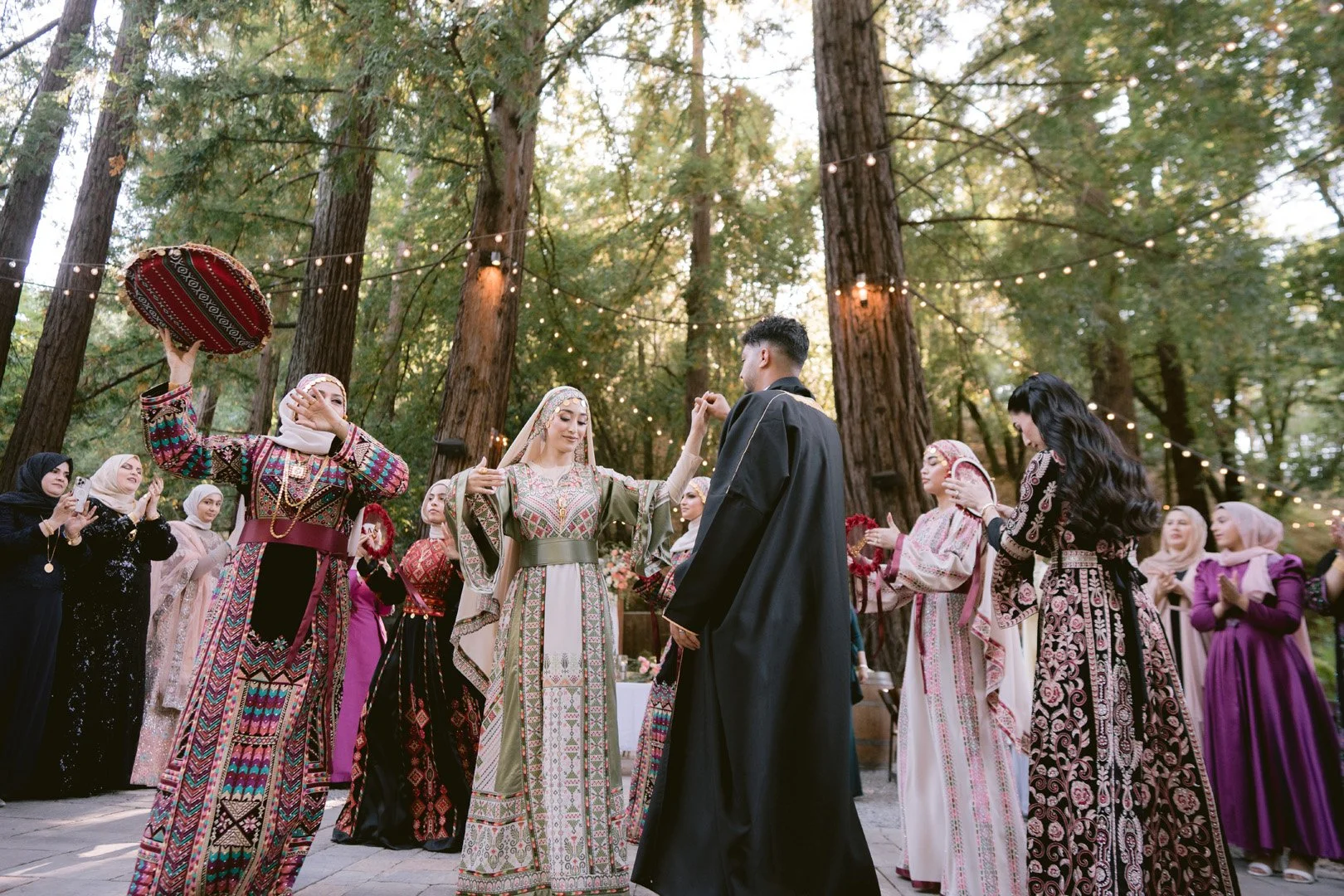
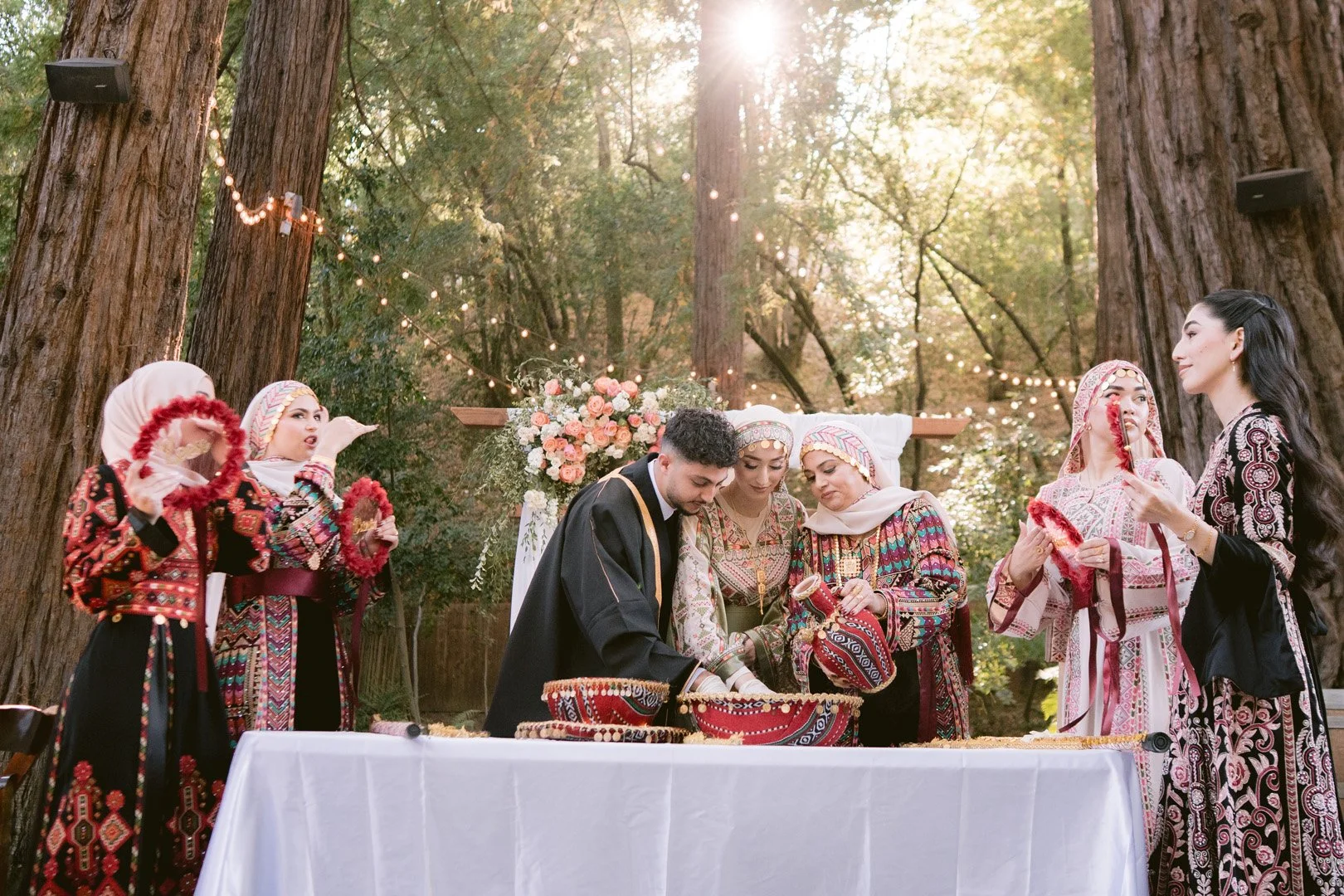
Afghan wedding fashion is not one dress.
A bride may wear white, green, red or another formal color; she may change outfits several times; she may choose a Western gown for one part of the wedding and Afghan clothing for another. Groom and guest attire can be equally fluid.
Traditional Afghan dress
Colorful handwork, metallic embroidery, mirrors, coins, beading, rich fabrics and regional silhouettes may appear in bridal, henna-night and guest clothing. “Traditional Afghan dress” is a broad category, not one standardized costume.
White bridal wear
Many contemporary Afghan brides wear a white gown or modest white bridal ensemble for the Nikah or reception. A white dress does not make the celebration less Afghan; many couples deliberately pair it with Afghan jewelry, music and ceremony traditions.
Green, red & jewel tones
Green appears often in Afghan wedding culture, particularly around religious or traditional moments, while red and saturated jewel tones are common in celebratory clothing. The meaning and preferred colors vary by family and region.
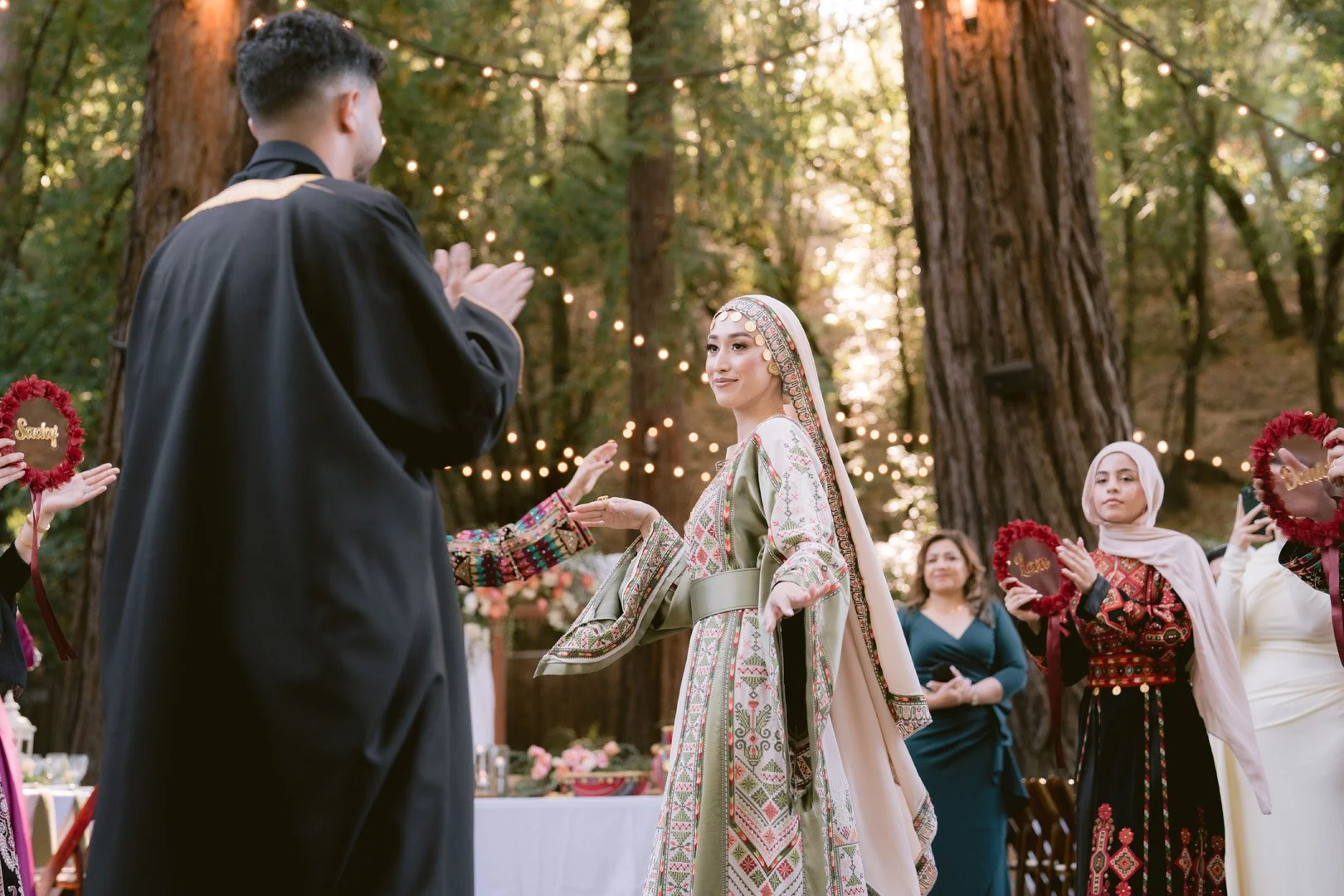
The dance floor tells you which family you are with.
Afghan wedding music can move from old classics to regional folk music, contemporary Afghan pop and global club tracks in a single night. A good program respects generations without turning the reception into a museum piece.
At an Afghan wedding, hospitality is visible.
Food is not background decoration. A generous table communicates welcome, respect and abundance. Menus vary by family and region, but several dishes appear again and again at Afghan celebrations.
Long-grain rice with meat, carrots and raisins, often finished with nuts. One of Afghanistan’s most celebrated dishes.
Steamed dumplings commonly filled with seasoned meat and onion, finished with yogurt and savory sauces.
Delicate dumplings traditionally filled with greens such as leek or scallion and served with yogurt and sauce.
Grilled meats, fresh Afghan bread, salads, herbs and chutneys help balance a banquet-style menu.
Tea, fruit, nuts, sweets and cake extend the sense of hospitality long after the main meal is cleared.
How to show up well.
If you have never attended an Afghan wedding, you do not need to memorize every custom. Thoughtfulness, modesty and respect for the family will take you further than trying to perform expertise you do not have.
Dress formally and modestly.
For a Nikah, err toward covered shoulders, longer hemlines and elegant formalwear unless the couple gives a different dress code.
Follow the room on greetings.
Some guests greet with hugs or cheek kisses; others avoid physical contact across genders. Let the other person set the cue.
Be ready for a big guest list.
Extended family and community ties matter. “Immediate family” can feel much larger than it does in a small Western wedding.
Respect photography boundaries.
Do not assume every guest wants to be filmed. This matters especially during religious moments or in more conservative families.
Expect food to keep coming.
Afghan hospitality can be generous. Accept what you can graciously; you do not need to turn dinner into a competitive event.
Let the family define the tradition.
If the ceremony differs from something you saw online, the family is not “doing it wrong.” Afghan wedding culture is broader than a checklist.
What the wedding day can feel like.
This is a planning example, not a cultural requirement. Some couples place the Nikah on a different day, some separate men and women, some skip a first dance, and some bring traditional rituals into the reception itself.
Family portraits & guest arrival
Tea, refreshments, greetings and early family photos while the room fills.
Nikah or ceremonial moment
If held the same day, the religious ceremony may take place before the main reception begins.
Grand entrance
The couple enters to Afghan music, live percussion, a family procession or a modern production moment.
Dinner & family program
Speeches, dinner, music and any family-specific traditions are placed here without rushing elders or meal service.
Attan / regional dance set
If Attan belongs to the family’s tradition, it may become one of the major collective moments of the night.
Open dance floor
Afghan classics, current music, regional favorites and the couple’s diaspora mix take over.
Tradition does not disappear abroad. It changes shape.
Afghan couples in the United States, Canada, Europe, Australia and elsewhere often build weddings that make sense in more than one cultural language at once. That can mean a Nikah and a Western ceremony, Afghan outfits and a white gown, Dari and English MCing, Qabuli Palaw beside another cuisine, or an Attan that moves straight into a global dance set.
Two languages
Bilingual hosting helps elders stay included without making younger or non-Afghan guests feel lost.
Two wardrobes
Outfit changes can carry identity: religious, Afghan, Western, regional and personal.
Two music worlds
The best dance floors do not force a choice between heritage and the music the couple actually lives with.
One family story
The goal is not to preserve every tradition unchanged. It is to keep the traditions that still mean something.
Questions to answer before you book the room.
The fastest way to reduce wedding friction is to decide which traditions belong to your family before vendors start building the timeline around assumptions.
The questions people actually ask.
How long does an Afghan wedding last?
There is no single standard. Some couples hold the Nikah and reception on one day. Others spread an engagement celebration, henna night, wedding and post-wedding gatherings across several days or even separate weekends.
What happens at an Afghan Nikah?
The Nikah is the Islamic marriage contract. Exact practice depends on the family, community and officiant, but it centers on consent to the marriage, the marriage agreement, mahr and religious recitation or guidance.
What is Aina Moshaf?
Aina Moshaf — with spellings that vary in English — is a custom observed by some Afghan families in which the newly married couple sits together with a mirror and Qur’an, often beneath a shawl. The exact ritual and its interpretation vary, and many Afghan weddings do not include it.
Is Attan performed at every Afghan wedding?
No. Attan is strongly associated with Pashtun culture and is widely recognized as a national Afghan dance, but wedding dance traditions vary by ethnicity, region and family. Some weddings feature Attan prominently; others do not.
What food is served at Afghan weddings?
Menus vary, but celebratory Afghan meals often feature rice dishes such as Qabuli Palaw along with kebabs, mantu, ashak, bolani, naan, salads, fruit, sweets and tea.
What should a guest wear to an Afghan wedding?
Dress formally and modestly unless the couple says otherwise. Afghan formalwear, embroidered dresses, suits and Western eveningwear may all be appropriate. For a religious ceremony, modest coverage is especially considerate.
Is “Afghani wedding” the right term?
“Afghan wedding” is the standard English phrasing because Afghan is the demonym for a person or culture from Afghanistan. “Afghani” is also a common search phrase, but it is formally the name of Afghanistan’s currency.
Who traditionally pays for an Afghan wedding?
There is no universal answer. Financial customs vary sharply by province, community and family, and practices have changed over time. Some families traditionally expect substantial costs from the groom’s side, while modern couples may divide expenses in very different ways. Discuss expectations directly rather than relying on a generic rule.
Built to be useful, not mythologized.
A note from Diaspora Weddings
This guide describes customs that appear across Afghan communities, but it does not claim that every Afghan family practices them. We intentionally distinguish Islamic requirements from cultural traditions and call out regional variation where it matters.
Planning an Afghan wedding?
Start with the right vendors.
Tell us what you need and we’ll match your wedding with vetted Afghan wedding vendors from our network.
Get matched with Afghan wedding vendors.
Choose the services you need. We’ll check our pool of vetted Afghan wedding vendors for fit and availability, then get back to you with a custom proposal.
- 01Choose your services.
- 02We check vetted Afghan vendors.
- 03Get your custom proposal.