
Persian
Weddings
Persian wedding customs often have a story behind them, and a little context helps you follow what’s happening during the Sofreh Aghd, the Aroosi reception, and the celebrations around them. This guide covers the traditions, the symbolism, the food, the music, and what to expect if you’re attending a Persian wedding or planning one.
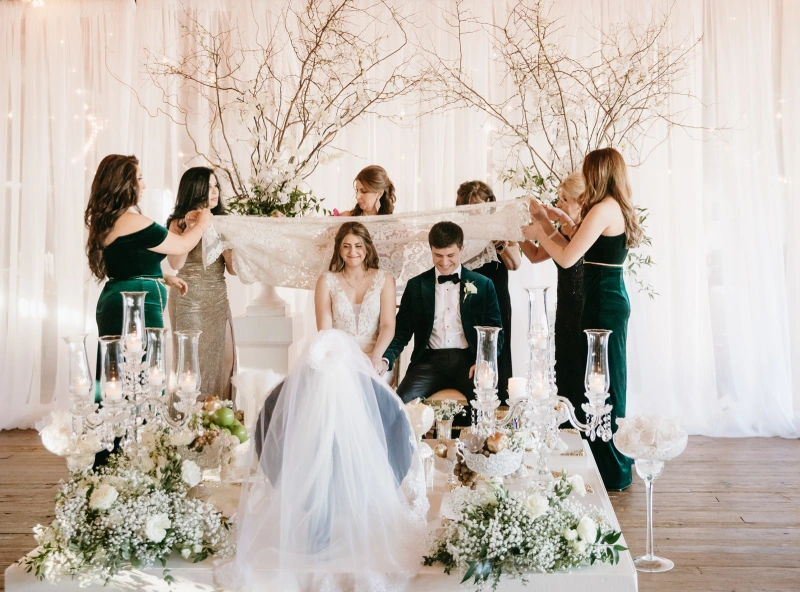
What makes a Persian wedding Persian?
A Persian wedding brings together a meaningful ceremony, a close role for family, and a joyful celebration. These familiar traditions give the day its character, with room for the couple’s own beliefs and preferences.
Aghd & Sofreh Aghd
- The Aghd is the marriage ceremony. The couple often sits before a Sofreh Aghd, a display of objects representing good wishes.
- Sharing honey and the sugar ceremony express a wish for a sweet life together.
A welcome from loved ones
- Parents and relatives often help prepare and host the celebration, making the wedding a shared family occasion.
- Some families continue the welcome with pagosha gatherings, inviting the newlyweds into relatives’ homes as a couple.
Aroosi: dinner & dancing
- The Aroosi is the wedding celebration, often bringing guests together over dinner, Persian music and lively dancing.
- Some receptions include the knife dance, a playful tradition before cake cutting that invites laughter and participation.
From introductions to engagement
Older Persian wedding customs can include several family-centered steps before the Aghd. Today, couples often adapt, combine or skip them, especially in the diaspora.
Family introductions
Traditionally, Khastegari is a formal meeting between the two families around the possibility of marriage. In modern relationships it may be less about asking permission and more about creating an intentional family introduction.
The families say “yes”
Bale Boroon can be a smaller gathering where the families formally celebrate the match and discuss next steps. Some families exchange gifts or mark the occasion with sweets, flowers and an engagement ring.
Engagement celebrations
Namzadi refers to the engagement period and, for some families, an engagement party. The scale ranges from a private dinner to a full event with formal attire, music, photography and extended family.
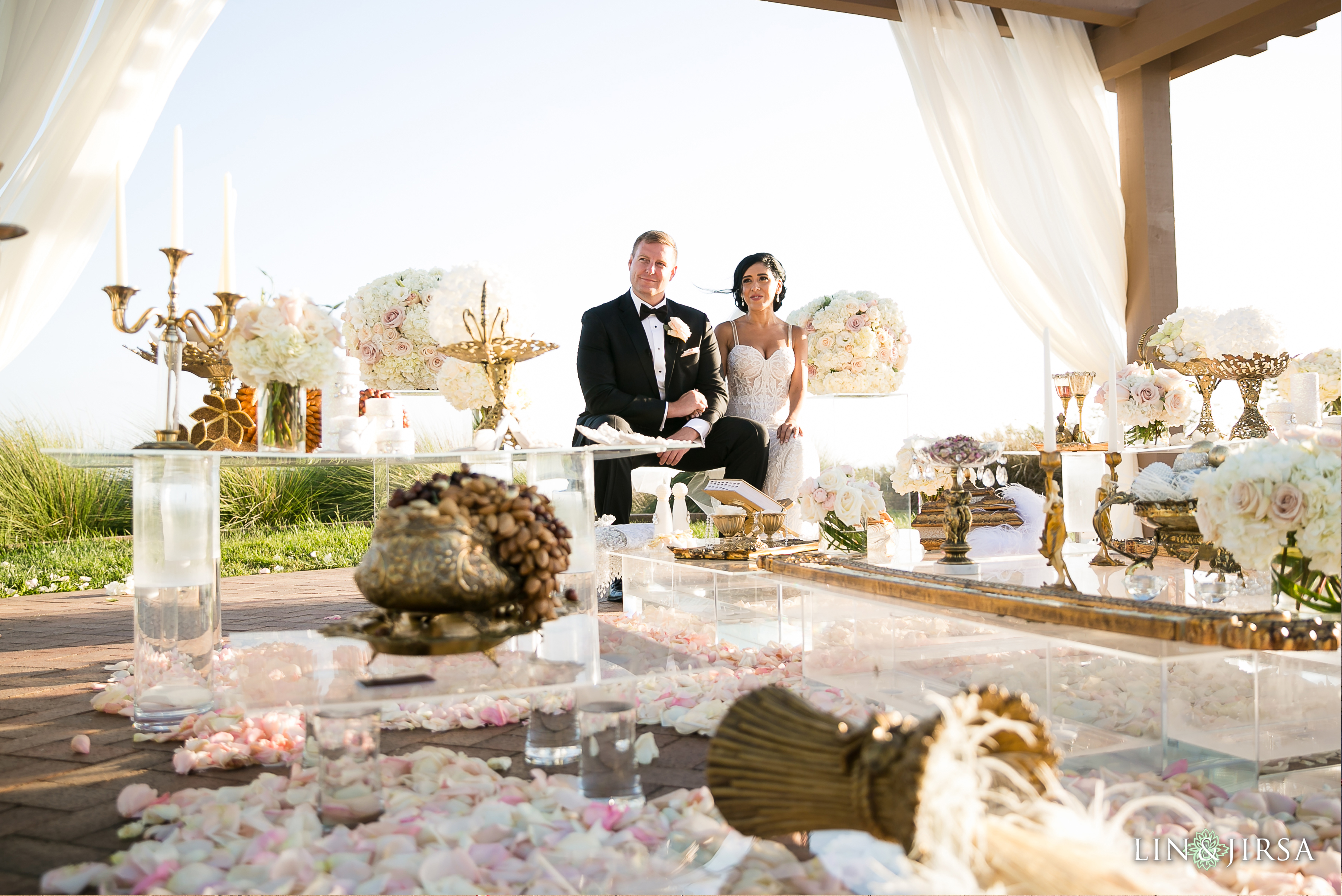
Aghd and Aroosi are not quite the same thing.
The Aghd is the marriage ceremony. The Jashn-e Aroosi is the wedding celebration or reception. They can happen back-to-back on one day, or the Aghd can take place earlier as a more intimate family event.
- 01Aghd: the couple sits before the Sofreh Aghd, consent is given, blessings and rituals are performed, and the marriage is celebrated ceremonially.
- 02Aroosi: the larger celebration: entrances, dinner, speeches, cake, music and a dance floor that can stay full for hours.
- 03Modern weddings: many diaspora couples combine the Persian Aghd with Western vows, a chuppah, church ceremony, Nikah, civil ceremony or another partner’s cultural traditions.
The Sofreh Aghd
The Sofreh Aghd is the ceremonial spread placed before the couple. It is part symbolism, part family memory and part visual art. Traditional objects carry wishes for sweetness, health, abundance, light, protection and a prosperous life together.
There is no requirement that every Sofreh contain the exact same objects. Family heirlooms, poetry, religious texts, modern florals and personal keepsakes are often incorporated. The result can be ornate and traditional or architectural and minimal while keeping the same cultural center.
Light & reflection
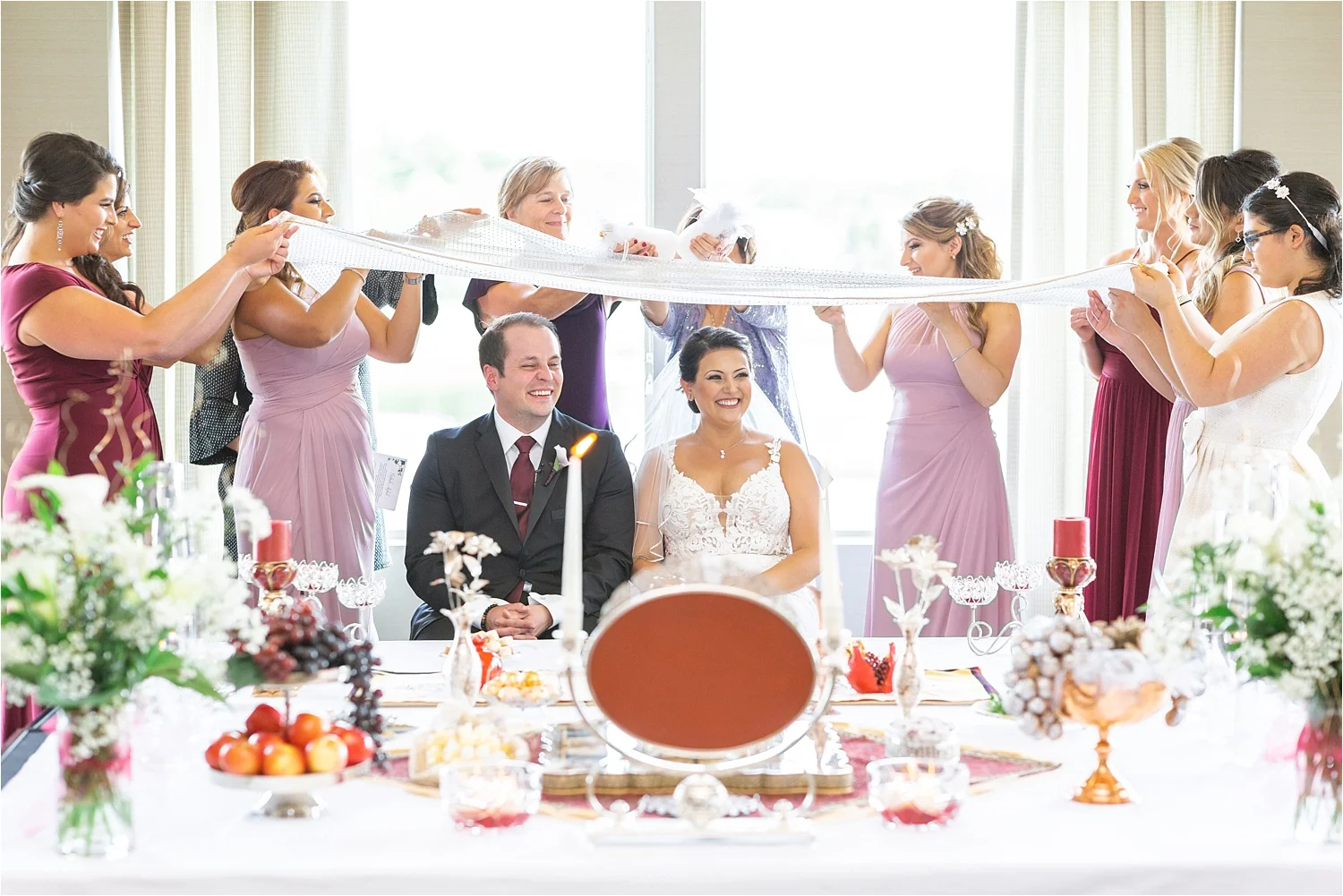
The mirror sits prominently before the couple, traditionally associated with brightness, clarity and seeing one another as they begin married life.
Warmth & illumination
Candles frame the Sofreh with light and warmth, often positioned beside the mirror.
Sweetness
Honey is used in one of the ceremony’s most recognizable rituals: the newlyweds feed a small taste to one another after the union.
Abundance
Decorative bread, wheat and grains can represent prosperity, sustenance and an abundant shared home.
New life
Decorated eggs are commonly included among the objects associated with fertility, continuity and the creation of a new family.
Prosperity & health
Walnuts, almonds, hazelnuts and fruits add texture and color while carrying associations with abundance and well-being.
Prosperity
Coins are a traditional wish for financial security and a prosperous future together.
Wisdom & beauty
Families may place poetry, scripture or another meaningful book alongside flowers, personalizing the Sofreh around their own beliefs and story.
Four rituals guests remember
The Aghd can be tender, funny and interactive at the same time. These traditions are common, but their wording and order vary by family and officiant.
The bride’s “baleh”
The groom is typically asked first. The bride may playfully delay her reply while family and friends call out lighthearted excuses. She then gives her “baleh,” meaning yes. The wording and pacing depend on the couple and their families.
Sugar over the couple
Loved ones hold a ceremonial cloth above the couple and rub sugar cones together over it, symbolically showering the marriage with sweetness and good wishes.
Feeding each other sweetness
After the ceremony, the couple dips a finger into honey and feeds it to one another, a small, intimate gesture representing a sweet life together.
Protection & good energy
Some families burn esfand, or wild rue, around important moments to guard against the evil eye and negative energy. Venues should be asked about flame and smoke restrictions in advance.
How a Persian wedding night usually flows
A modern Persian reception often follows the familiar structure of a large Western wedding, but the energy is different: long dance sets, extended family participation and a music mix that can move from classic Iranian favorites to current Persian pop, house, hip-hop, Latin and global dance music.
Cocktail hour
Guests mingle, greet family and settle into the venue. Couples often use this window for portraits or a room reveal.
Grand entrance
The newlyweds enter to a high-energy track, frequently followed by an immediate dance set instead of waiting until after dinner.
Food, toasts & family
Dinner can be plated, family-style or buffet. Persian weddings often invest heavily in hospitality, generous food and a polished guest experience.
Knife dance & cake
Before cake cutting, a guest may dance with the cake knife while the couple playfully tries to retrieve it, one of the reception’s most crowd-friendly moments.
The real dance floor
Once formalities are finished, the room can turn into a proper party. Strong Persian wedding DJs build in waves rather than treating the cultural music as a short “ethnic set.”

A Persian dance floor should feel fluent, not forced.
Music is one of the biggest cultural signals at the reception. The strongest sets understand generations: classic songs for parents and relatives, contemporary Persian music for younger guests, and enough international crossover to bring the entire room together.
- 01Persian classics: familiar songs can pull multiple generations onto the floor at once.
- 02Current Persian pop: the newer catalog keeps the wedding connected to what guests actually listen to now.
- 03Bandari & regional energy: depending on the family, high-energy southern rhythms and regional favorites can be essential.
- 04Global crossover: house, hip-hop, Arabic, Latin, Bollywood, Armenian or Western pop can sit naturally beside Persian music in multicultural weddings.

Hospitality is part of the main event.
Persian weddings are famous for feeding people well. Menus vary by region, family and venue, but saffron, fragrant rice, grilled meats, herbs, stews, fruit, tea and sweets are familiar anchors.
Planning tip: if Persian food matters to the family, confirm the caterer can execute rice, tahdig and grilled items at wedding scale, rather than just make a Persian-inspired menu.
What to wear, bring and expect
Persian weddings often feel glamorous, social and highly polished. The invitation is still the authority, but guests are rarely expected to dress casually unless the couple specifically says so.
Lean polished
Formal, black tie and cocktail attire are all common. Evening gowns, suits and tuxedos fit naturally at upscale Persian receptions. Avoid white unless the couple explicitly welcomes it.
Know the ceremony plan
If the Aghd is listed separately, arrive early enough to see the Sofreh and be seated before the couple enters. Some weddings move immediately from ceremony into cocktails.
Join the energy
You do not need to know every song or dance step. Guests are usually welcomed onto the floor quickly. Follow the family’s lead and enjoy the celebration.
Follow the registry
Cash gifts are common in many Persian families, but modern couples may use a registry or honeymoon fund. The invitation or wedding website should guide you.
Respect the moment
The Sofreh is visually striking, but avoid stepping into the aisle or blocking professional photographers during the Aghd and sugar ceremony.
A little Farsi goes far
“Mobarak bashe” (مبارک باشه) is a natural way to say “congratulations.” Say it when greeting the newlyweds or their families. A warm “Congratulations!” in English is just as welcome.
Build the day around the moments that need cultural fluency.
The biggest planning mistake is treating the Persian elements as décor added onto a standard wedding timeline. The ceremony, family introductions, music cues, language and food all affect timing and vendor choices.
Decide what the Aghd means to you
Choose the rituals you actually want, who will officiate, which language or languages will be used, and whether Western vows or another ceremony are being combined with it.
Design the Sofreh early
Sofreh designers, florists and rental teams need enough room, setup time and a clear ceremony floor plan. Confirm what the venue allows for candles and esfand.
Hire vendors who know the pacing
A planner, DJ/MC, photographer and videographer who understand the Aghd will anticipate the sugar ceremony, honey, family reactions, knife dance and reception energy.
Make the timeline bilingual where useful
Older relatives and non-Persian guests should both understand what is happening. A short explanation in the program or ceremony can make the traditions more meaningful to everyone.
Plan music as a full-night blend
Give your DJ context about the family: favorite eras, regional preferences, songs that are essential, songs to avoid, and how international the crowd will be.
Questions people ask all the time
Traditions vary by family, region, religion and generation. When in doubt, the couple’s own ceremony plan is the right answer.
What happens at a Persian wedding?
A Persian wedding often includes an Aghd marriage ceremony centered on a Sofreh Aghd, followed by a Jashn-e Aroosi or wedding reception with dinner, music and dancing. Some couples hold both on the same day; others separate them.
What is a Sofreh Aghd?
The Sofreh Aghd is the ceremonial spread placed before the couple during the Persian marriage ceremony. Common objects include a mirror, candles, honey, sugar, bread, nuts, eggs, fruit, flowers, coins and a meaningful book.
Why does the bride delay saying “baleh”?
In this playful consent tradition, the bride pauses while friends and family call out lighthearted excuses, such as saying she has gone to pick flowers. The exchange builds anticipation before her “baleh,” meaning yes. Couples can adapt the wording and pacing.
Why are sugar cones rubbed over the couple?
Loved ones rub sugar cones over a ceremonial cloth held above the couple, symbolically showering their marriage with sweetness and good wishes.
What is the honey ceremony?
After the union, the newlyweds feed each other a small taste of honey. The gesture represents bringing sweetness into their life together.
What is the Persian wedding knife dance?
The knife dance, often called Raghse Chaghoo, happens before the cake cutting. A guest dances with the cake knife while the couple playfully tries to persuade them to hand it over, often with money or gifts.
What should I wear to a Persian wedding?
Follow the invitation. Cocktail, formal and black-tie dress codes are common, and many Persian wedding receptions are intentionally glamorous. Avoid wearing white unless the couple says otherwise.
Do Persian weddings have to be religious?
No. Persian wedding customs are practiced in many different ways. Some Aghd ceremonies are religious, some are secular, and many are interfaith or multicultural. The Sofreh itself is commonly personalized around the couple and family.
How long is a Persian wedding?
The Aghd itself may be relatively short, while the full wedding day can run many hours once photos, cocktail hour, dinner and dancing are included. Large receptions often continue late into the night.
Get matched with Persian wedding vendors.
Choose the services you need. We’ll check our pool of vetted Persian wedding vendors for fit and availability, then get back to you with a custom proposal.
- 01Choose your services.
- 02We check vetted Persian vendors.
- 03Get your custom proposal.
Planning a Persian wedding that feels like your family?
Tell us what you need and we’ll match your wedding with vetted Persian wedding vendors from our network.